AI is just a tool: what makes the difference is you.
The idea that AI can replace thinking, feeling humans is a techno-dream.
We run a small software company in Amsterdam. At our company, we have embraced AI tools, for administrative tasks, but lately more and more for coding.
The word “coding” is to be understood literally: the actual activity of writing code. What has changed within the multi-facetted role of the software developer is that we now use a machine to do the actual production of code.
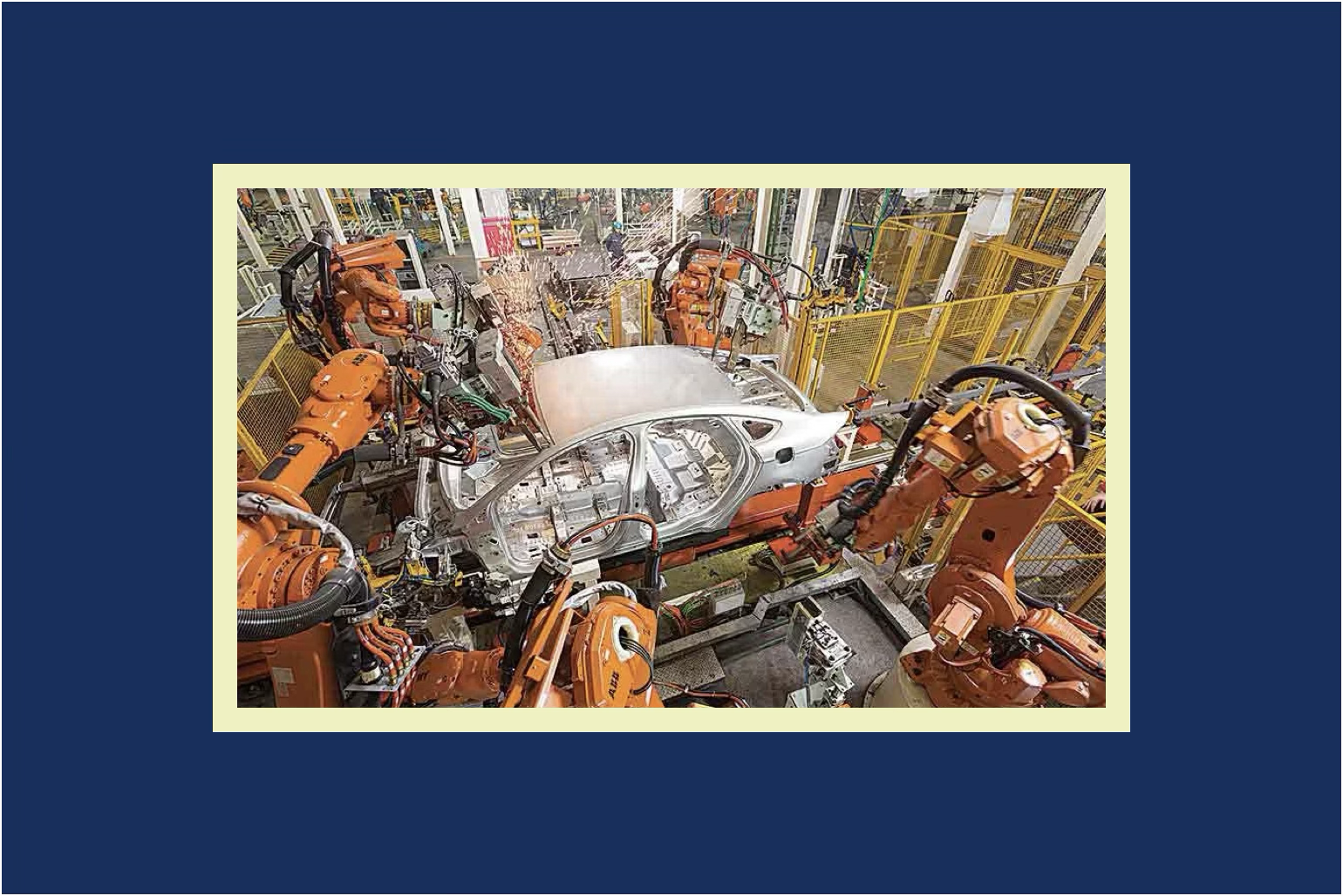
We have all seen the video clips of an automobile production line. The most dramatic: welding operations.
The car comes into the frame, locks into position. Then, octopus arms shoot out, touch the car in a flash of light, one, two, three, four times; retract just as quickly. An engineer at the control panel looking on.
A metaphor for the coding agent perhaps, to make the interaction between the human initiating the operation and the agent performing it more clear. How does this comparison hold up and at which point does it break down?
Just like the human engineer who programmes the welding robot, the developer instructs the coding agent. In advanced production lines, AI-powered welding robots differentiate between different models, enabling them to handle model variants such as EV and hybrid. Likewise, coding agents take the context of the application into account when creating a solution.
But here’s where it breaks down: even with AI, the welding robot acts within defined physical and logical parameters, whereas the coding agent has far more leeway. It can suggest alternative solutions, resolve incorrect assumptions, handle open-ended, abstract instructions.
However.
It’s the human who empathises with the human who is to work with the application, not the coding agent. Who guides the other through the application flow, warns that crucial actions are about to happen, choices to be made. Sure, some flows are boilerplate. But the object of the flow in the context of the goals of the application isn’t.
We are currently resolving the last issues of an HR platform we are building. The platform is quite involved: creating job offers, responding to them, profiles, products and payments. We make use of AI to fix issues and improve application flow. But it’s always a human who decides when the flow is just right, when a toggle moves perfectly, hones the user interface so a jarring switch moves nicely.
Some say the software developer is doomed to follow the plight of the telephone switchboard operator. In the early 1900’s, millions were employed in this role, having followed a meticulous training to be able to intuit the algorithms of complex routing operations. By the 1970’s, the role was automated away.
It will take a whole lot of progress to automate a software developer away. The coder part, yes. In time, all coding will be done by agents, much like the welding is done by robots on the production line.
But at the controls will be the human, the thinking, feeling human.
The empathetic human.