Bernie Sanders is 85 and Dwarkesh Patel is 25, but they both say the same about AI and your job.
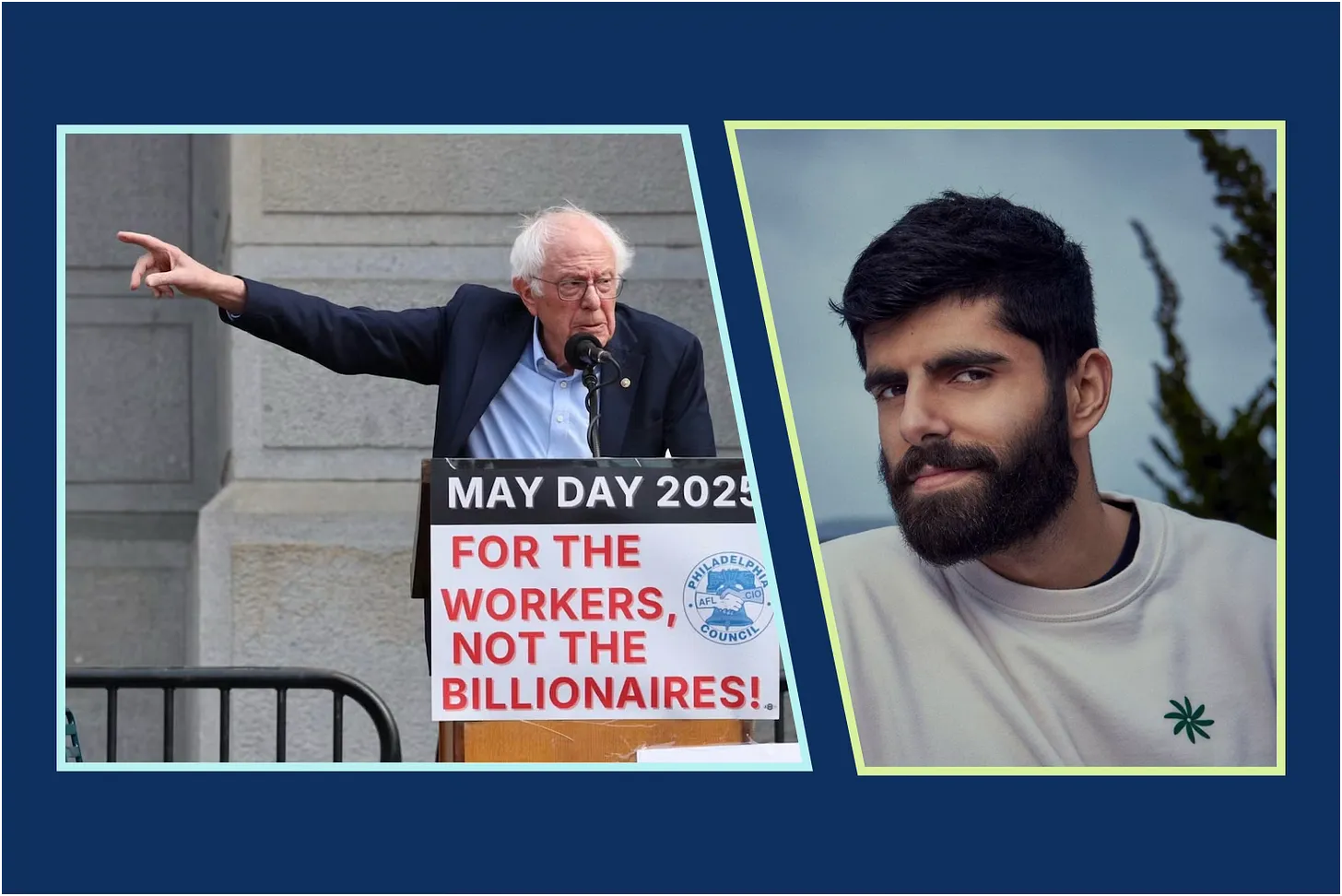
They say that AI will have your job. But for Dwarkesh, the future doesn’t hold the gloom and doom it does for Bernie.
You might know who Bernie Sanders is, he’s been around a while. He’s a senator from Vermont, twice presidential candidate, and a prominent progressive voice in US politics for decades.
He’s on TikTok, yesterday I happened upon a post of his. Central thesis: the AI revolution will have a hundred times the impact of the industrial revolution: ten times more disruptive and ten times faster.
Despite his youth, Dwarkesh Patel has attracted notable figures from many industries and walks of life to his podcast. To give an idea of the breadth, he interviewed Ilya Sutskever of Safe Superintelligence Inc., and Dario Amodei of Anthropic. But then also Adam Marblestone, who with his company Convergent Research leads efforts to fund breakthrough science into human cognition, emotion, and ethics. And, to my surprise, novelist and researcher Ada Palmer, who is an expert on the Renaissance.
In a recent essay, Dwarkesh expands upon the conflict between the US government and Anthropic, but he also goes into what Amodei says about the impact AI he expects AI to have on society, jobs and economics. And the speed with which changes are going to take place.
————————————-
Two generations so far apart come to the same conclusion: AI will be a thorough disrupter.
————————————-
The timeframe? Patel says that AI will disrupt the job market on an unprecedented scale and speed.
Describing a future where AI agents could perform most tasks currently done by humans, he even suggests that the majority of beings in the future may be digital, not human.
Sanders warns that AI and automation could eliminate nearly 100 million US jobs within a decade.
————————————-
Where Bernie Sanders sees doomsday, Dwarkesh Patel sees opportunity.
————————————-
The AI revolution is a threat to democracy, worker rights, and economic equity, says a deeply pessimistic Sanders, warning of a dystopian future where a handful of oligarchs control the means of production and most people are left without meaningful work or income.
Patel is more optimistic. Upbeat even. He envisions a future where AI agents could form a “hive mind,” continuously learning and improving, and where humans might transition to roles that leverage AI rather than compete with it.
He also explores the idea that AI could lead to a post-scarcity economy, though he cautions about the need for careful governance to avoid negative outcomes
————————————-
The solutions of the past aren’t going to solve the problems of the future.
————————————-
The solution that Bernie Sanders proposes, predictably, is more government control, stronger unions, including a “robot tax” on automation to fund social programs.
Harking back to the high point in American prowess, he emphasises the need for government investment. But now not to create the middle class as the US did in the fifties, but create new jobs in sectors like green energy and infrastructure.
For Patel however, regulation and government oversight play far less a role. His is a more technological approach, he believes the key is to ensure AI systems can keep learning and improving after deployment, rather than being static tools.
He focuses on the potential for AI to create new economic models, such as “automated firms” where AI agents handle most tasks, but humans remain in oversight or creative roles.
While Sanders promotes a category of solutions that have been proposed since the industrial revolution, Patel takes a turn toward the future.
————————————-
Change is difficult, but we’re hoping for a Second Renaissance.
————————————-
When Ada Palmer describes the Renaissance as a giant leap forward, in how we think, work, and create, she reminds us that disruption births new paradigms and new problems. The Renaissance led to the Enlightenment, science, industry, and prosperity. But also disenfranchisement of peasants, the suffering of workers in mines and factories.
Through the hard work of unions and politicians like Bernie Sanders we — at least here in the West — have a measure of social security which mitigates the worst of unbridled capitalism. But that’s a solution of a much slower age.
Patel would agree with Sanders, ten times the disruption, ten times faster. And yes, workers would be losing their jobs. Their current jobs. But they would be moving into something more creative and fulfilling.
At Django Web Studio, we tend to agree. We’re acknowledging that AI has coding largely solved, which has far-reaching consequences for our mission as a software company. We realise that to move forward, we must pivot away from the computer screen. To do what humans do best: invent, oversee, and inspire.