Seven American AI Companies With Morals That We Might Want to Welcome Into The European Union.
Anthropic is making a moral stand against Trump’s administration. But there are more like them. Should we invite them to register as a EU company?
Here in the EU, we’re desperate to catch up to the US and China.
At the same time, American AI with morals ls getting a hard time from Trump.
Such as Anthropic, which has been threatened with the near-death sentence of being designated a supply chain risk for defying the demand to allow use of their AI Claude for autonomous weaponry and mass surveillance.
Should we not invite such companies to cross the ditch into the more reasonable state of mind of us Europeans? They could maybe settle in the Mediterranean countries, with its benign weather.
Short answer? Even if we would want to try, it’s extremely unlikely they’d accept. Or could. Europe’s investment climate is vastly different, however nice the weather can be.
Here’s seven US AI companies that we might want to make the move to the EU.
1. Anthropic. Currently in a public standoff with the US Pentagon over its refusal to allow its AI models to be used for autonomous weapons or mass surveillance. Anthropic’s CEO, Dario Amodei, has drawn clear ethical lines, making the company a prime candidate for a more supportive regulatory environment in Europe.
2. OpenAI. While I don’t consider OpenAI as particularly moral, having recently struck deals with the US military, it does have a history of internal debate and public statements about ethical AI use. Some factions within the company may still prefer a jurisdiction with stronger ethical guardrails.
3. Hugging Face. Known for its open-source approach and community-driven ethics, Hugging Face has consistently advocated for responsible AI development and could find Europe’s regulatory framework more aligned with its values.
4. Scale AI. Focuses on AI safety and has worked with both commercial and government clients, but its emphasis on ethical AI deployment could make it a good fit for the EU’s approach.
5. Inflection AI. Founded by former DeepMind and Google leaders, Inflection AI has emphasised personal and ethical AI, which could resonate with European priorities.
6. Cohere. This company has positioned itself as a responsible AI provider, focusing on enterprise solutions with a strong emphasis on safety and transparency, making it a natural fit for the EU’s AI Act.
7. Adept. It’s focus on building general-purpose Agentic AI with safety and alignment in mind could make it attractive to European regulators and investors seeking alternatives to more militarised AI development. It’s still in the list of seven, even after the brain drain that occurred during ‘24 and ‘25, when Google and Amazon acquired top talent. With it’s weakened capacity to attract US investment it might want to take the transatlantic leap.
Why Europe?
The EU’s AI Act and regulatory environment are designed to prioritise safety, transparency, and human rights, which are values that the seven are attempting to adhere to.
Introducing the Mediterranean’s quality of life is kind of a joke of course, I was thinking of a region that could compare the mild Californian weather of Silicon Valley.
But it’s a fact that Europe’s AI ecosystem is growing, with hubs in France, Germany, and the Netherlands, and nice weather could further sweeten the deal.
But wouldn’t the EU counterparts just hate erstwhile US companies moving into their territory?
Let’s look at how the Seven compares to existing EU AI.
- Anthropic boasts a valuation of $30 billion, and lines up with Mistral AI (France), valued at $6 billion, which also prioritises transparency and ethical AI development.
- OpenAI, a pioneer in general-purpose AI with a balance of cutting-edge research and commercial products, is valued at $100 billion+. Its closest EU counterpart is Aleph Alpha (Germany), valued at $1 billion, known for its focus on sovereign, ethical AI solutions.
- Hugging Face is the open-source AI hub, democratising access to machine learning models and tools, with a valuation of $4.5 billion. While headquartered in NYC, its strong EU roots and community-driven approach align with Hugging Face’s own Paris office, reinforcing its transatlantic presence.

- Scale AI specialises in data labelling and responsible AI deployment for enterprises, valued at $13.8 billion. Its EU counterpart is Kili Technology, which provides a data labelling and model training platform for enterprises, with a strong emphasis on collaboration, quality control, and compliance, including GDPR. It’s designed for teams building AI models in regulated industries such as healthcare and finance. It’s estimated valuation is in the €100–200 million range.
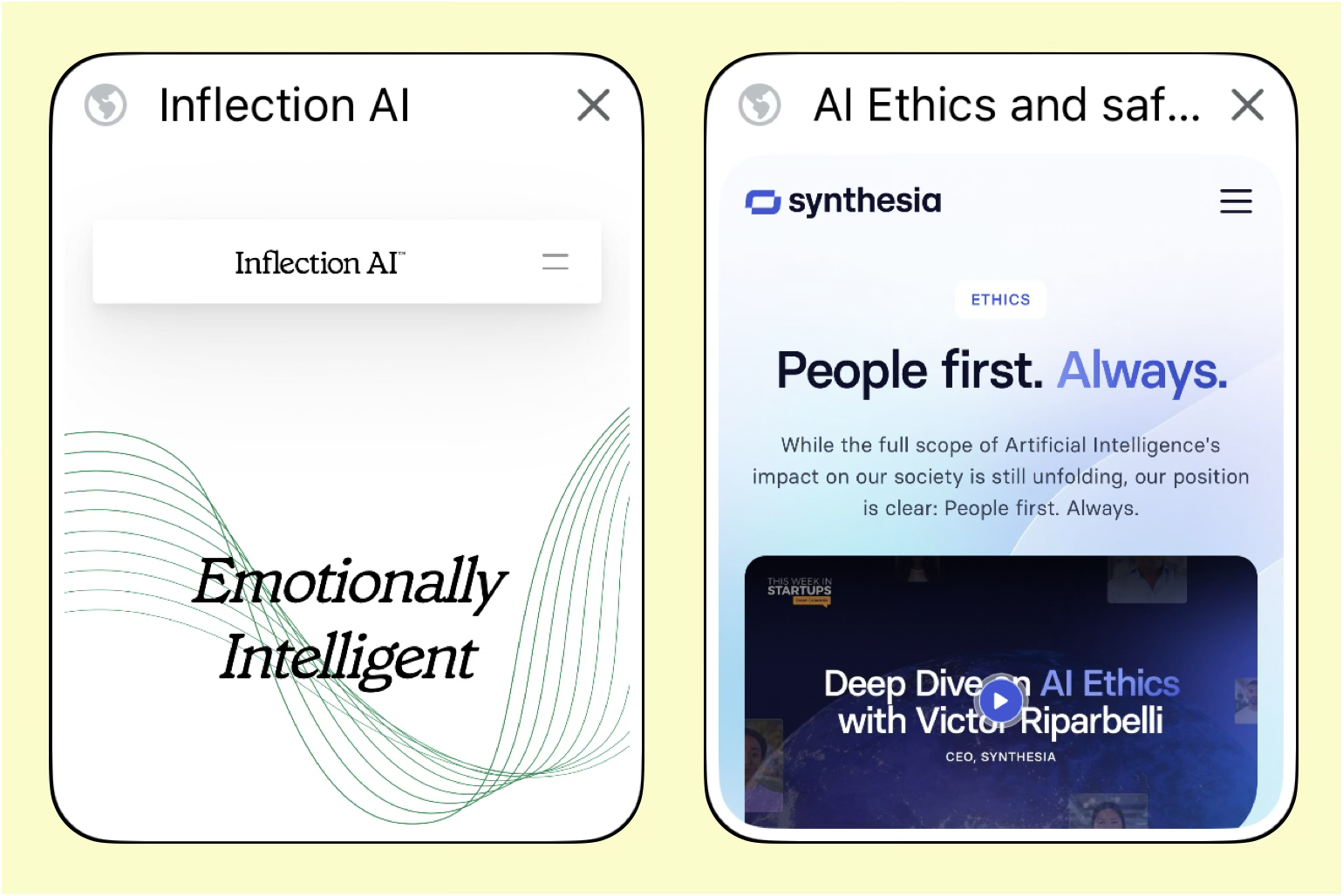
- Inflection AI emphasises personal, user-aligned AI with ethical design, founded by ex-DeepMind and Google leaders, and is valued at $4 billion. This aligns with Synthesia (UK), valued at $1.5 billion, which specialises in ethical AI-generated video and synthetic media.
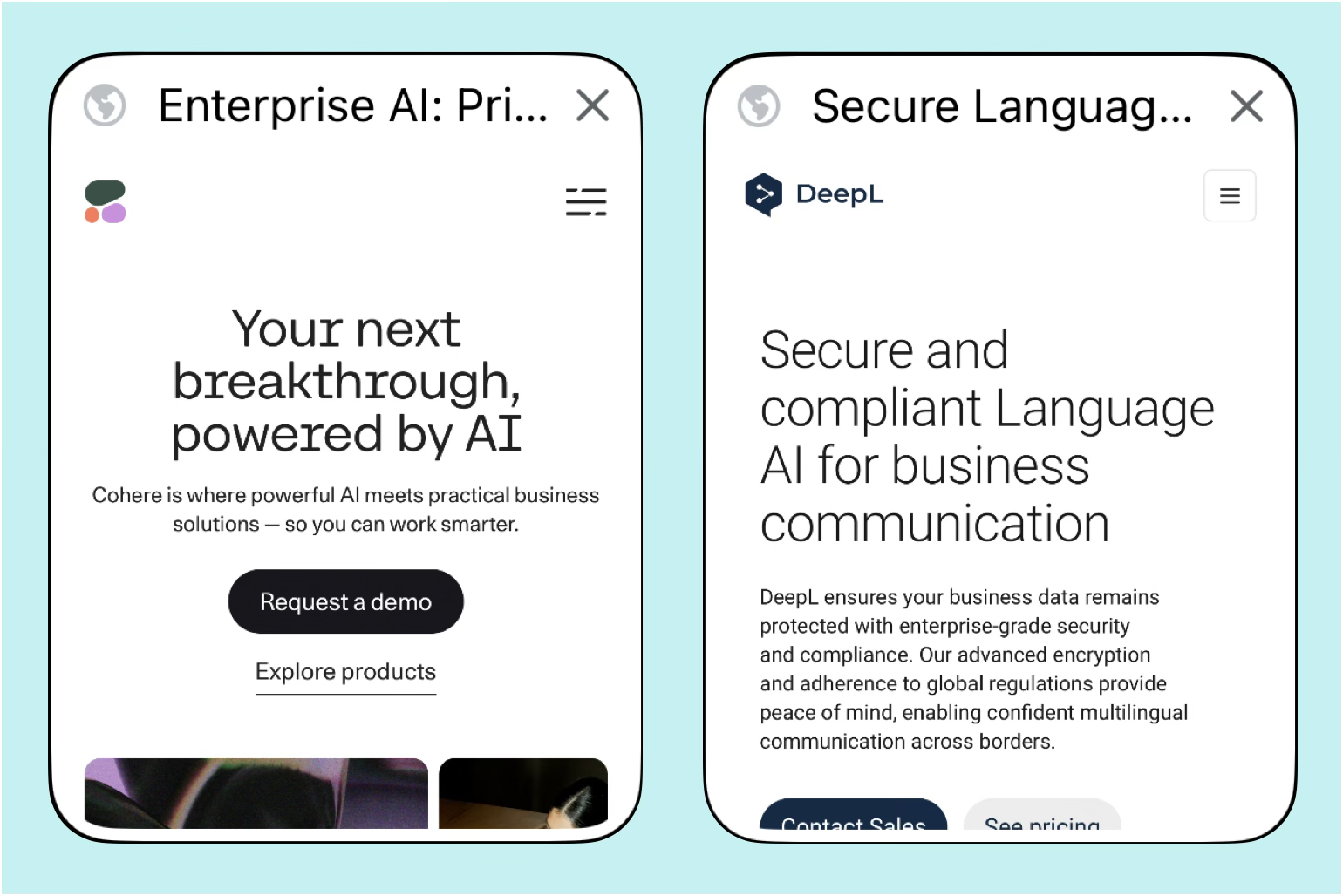
- Cohere delivers enterprise-focused, safety-first AI with a strong emphasis on transparency and explainability, valued at $5 billion. Its EU equivalent is DeepL (Germany), valued at $2 billion, renowned for its high-accuracy, privacy-conscious language models.
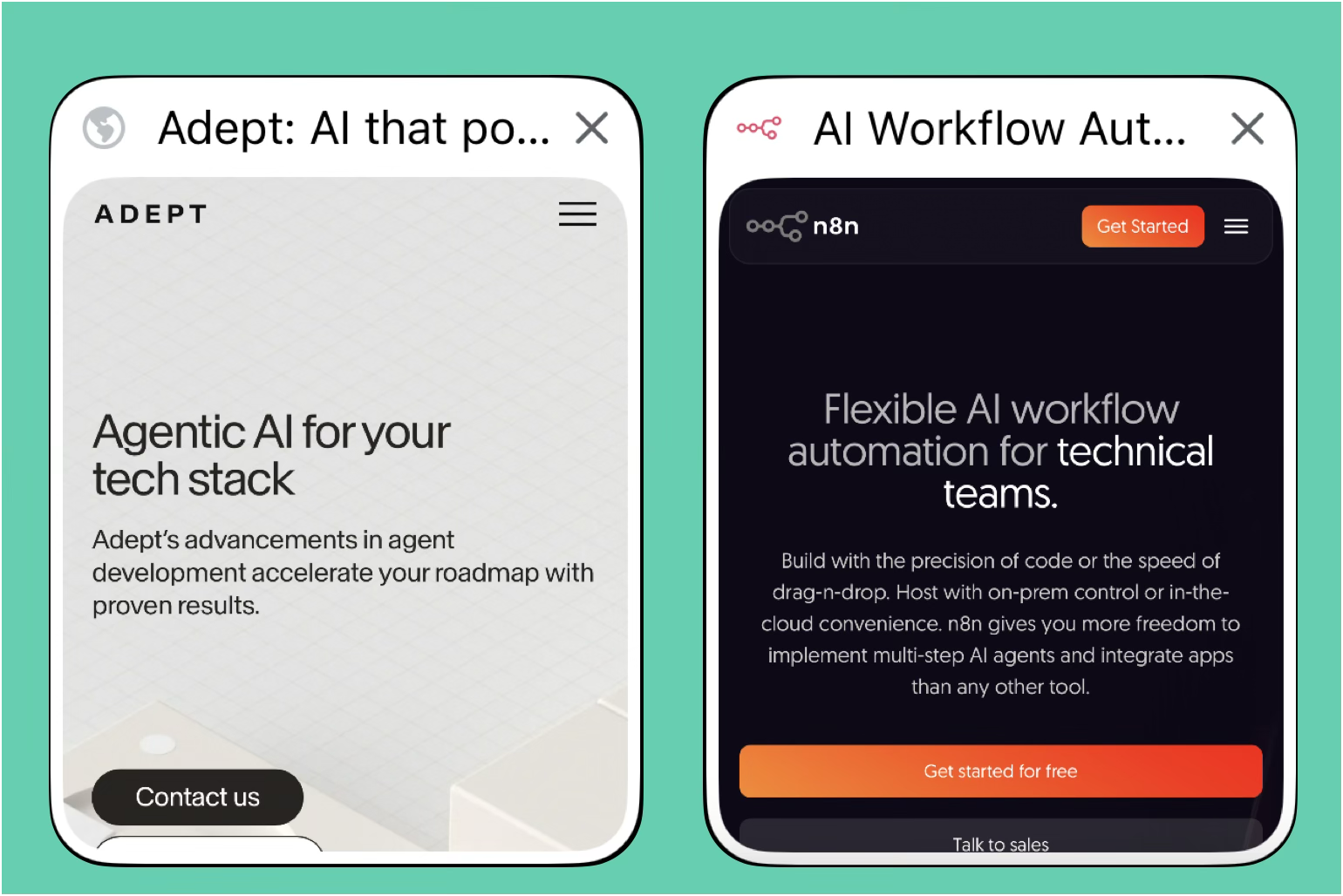
- Adept builds general-purpose Agentic AI with safety and human alignment at its core, valued at $1 billion. Closest match within the EU is n8n, offering AI-powered workflow automation and agentic orchestration, connecting apps, data, and actions across business systems. N8n was valued at $2.5 billion as of October 2025.
Would existing EU companies welcome intruders from the US into their markets? No. But there's not much to be afraid of.
Here’s why.
The valuation of the Seven makes it clear that should they move to the EU, they’d have to take their investors along with them.
Here’s the total cumulative funding into the Seven, offset against the total of potential private and public investment here in the EU.
Now, there are different numbers floating around, different outcomes depending on how you ask the question. For instance, total investment in OpenAI is said to be $189B in some quarters but if you tally up the actual investment you get a much lower number. Doesn’t really matter in the light of the conclusion we come to below, suffice to know I took pains to get real numbers.
Anthropic: $7.3 billion
OpenAI: $11.3 billion
Hugging Face: $395 million
Scale AI: $1.6 billion
Inflection AI: $1.5 billion
Cohere: $445 million
Adept: $415 million
———————————-
Total: ~ $22.96 billion
The $22.96 billion raised by these seven companies exceeds the EU’s entire annual AI investment capacity.
The EU’s Annual AI Investment Capacity across 2025–2026 is $19–21 billion. That’s including private venture capital, public investment such as Horizon Europe, the Digital Europe Programme, National AI Programs in Germany, France and others, and the European Investment Bank & European Investment Fund.
Seems close, but the EU’s $19–21B/year is split across hundreds of startups, research projects, and national initiatives. The Seven alone would easily eat up all our investment capacity.
And the appetite for risk is much lower here in Europe. While US investors tend to bet big on on unprofitable, high-growth AI labs, EU investors play it safe, often investing only after a company has proved itself to be profitable, or close.
The EU’s current investment landscape is simply not scaled to absorb such a massive influx without a dramatic shift in policy and private sector engagement.
So should we even dream of attracting American companies to register in the EU, even if they show EU morals?
The side-by-side shows that for every category of company in the US, there’s a match within the EU.
Sure, the numbers here are much lower, and loud US companies attract all the attention.
The tradition of high stakes investments in the US resonate with us here in careful EU, but our political and economic structure is dramatically more differentiated and diverse, with 27 countries, 60 languages and 84 cultures.
It makes sense that outsiders might feel that the EU is losing the game against the US and China, both of which have a way to concentrate huge funds into a few initiatives.
Just as language, culture and politics here is first regional, then national, and only then, after some thought, EU, so too are investments focused on smaller enterprises before moving EU-wide.
Which has the advantage that capital spreads out among many smaller players, in keeping with the morals of inclusion and equality prevalent in the EU.
So should we want to harbour refugee US companies, running from the wrath of Trump? Even if they too have morals?
Maybe if they ask nicely. And bring fat wallets.
Header image: Leonardo da Vinci, polymath from Florence, Italy (which is in the Mediterranean), 15th century. This drawing studies the human brain.