Three examples of a paradigm shift nobody saw coming.
They say AI is a paradigm shift. But a shift to what exactly? Thing is we don’t know till we know.
AI is proving to be the hottest tech since the internet. Everyone is trying it, companies are investing millions, not to mention investors who are pumping billions into research and data centres.
But, be honest, is speeding up your writing, automating marketing, faster coding, is that the best we can do?
I’d expected more.
Here’s three paradigm shifts that actually changed society.
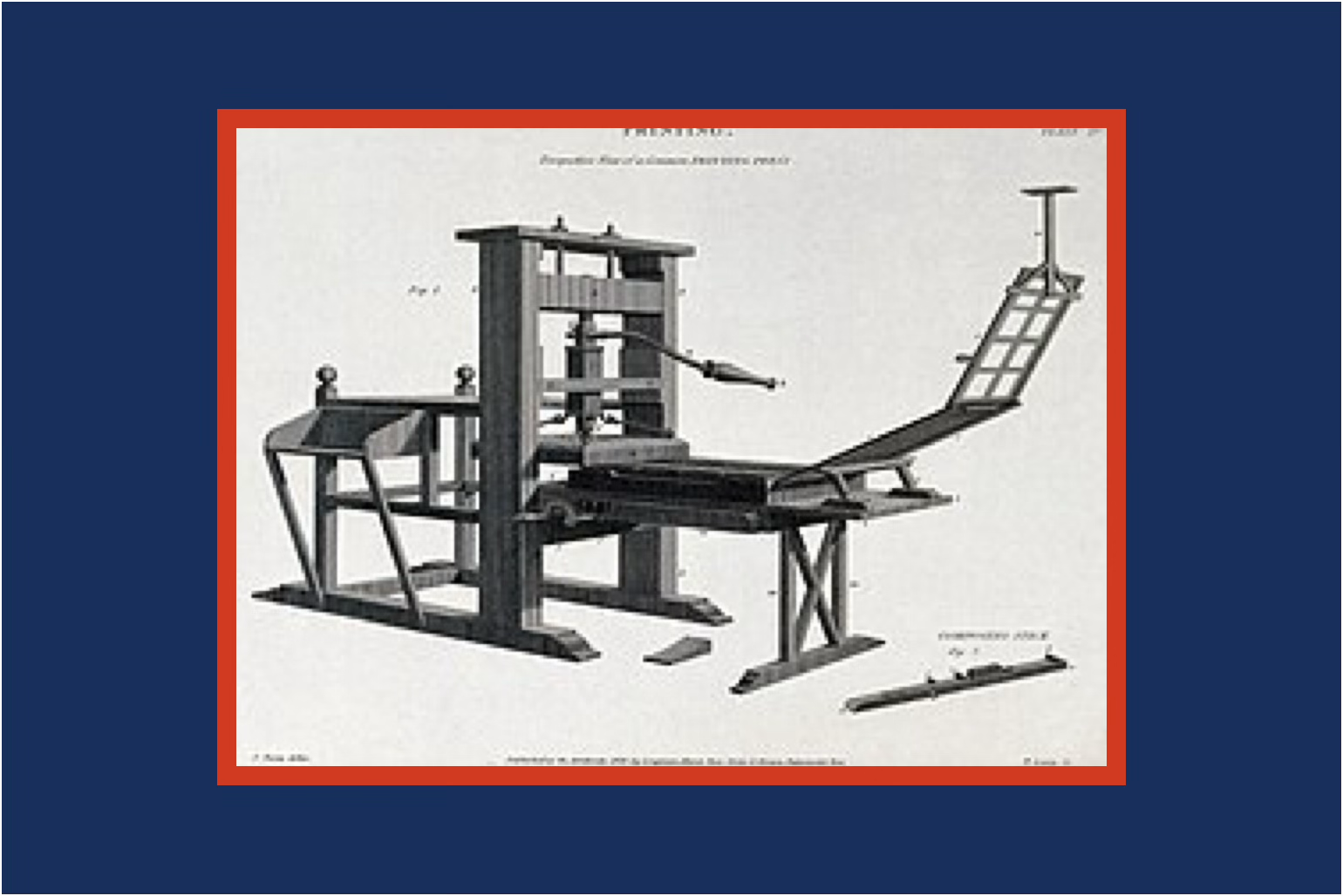
📚The Printing Press (15th Century)
Shift: From oral and handwritten culture to mass literacy and democratized knowledge.
Why it was unexpected: Before Gutenberg, books were painstakingly copied by monks, accessible only to elites. The idea that ordinary people could own books, or that ideas could spread faster than a horse could gallop, was unthinkable. The printing press didn’t just make books cheaper; it sparked the Reformation, scientific revolutions, and the rise of modern democracy. It turned knowledge into a public good, not a privilege.
🛜 The Internet (Late 20th Century)
Shift: From centralised control of information to decentralised, global connectivity.
Why it was unexpected: Early networks like ARPANET were military tools. Few foresaw a world where anyone could publish, connect, or access the sum of human knowledge from a pocket device. Among those few: Vannavar Bush, in his landmark essay “As We May Think”.
The internet didn’t just change communication; it redefined commerce (Amazon, eBay), social interaction (Facebook, Twitter), and even politics (Arab Spring, misinformation). It made geography irrelevant and turned attention, clicks and views into a new currency.
📱The Smartphone (2007)
Shift: From computers as stationary tools to always-on, always-connected personal devices.
Why it was unexpected: Before the iPhone, phones were for calls and texts. The idea that a single device could replace cameras, maps, wallets, and even doctors (via telemedicine) was science fiction. Smartphones didn’t just put the internet in our pockets, they created entirely new industries (app economy, gig work) and reshaped human behavior (constant connectivity, social media addiction, always on).
Compared to the printing press, the internet and the smartphone are just hops, not jumps.
Of the three examples, the invention of the printing press is the most important. It mechanised knowledge dissemination, enabling written knowledge sources to permeate through the whole society, as opposed to be only available for the elites.
Gutenberg himself was an artisan, not a member of the religious elite and nobility. The printing press enabled his circle to easily access written sources of knowledge, which then aided the education of the population classes just outside of his circle and so, in time, as society became increasingly dependent on written sources, most of the population learned to read and we see libraries spring up everywhere.
The internet is a jump but it depends on a thoroughly literate society, the iPhone is a jump in the sense that it moves the paradigm of gaining access to knowledge from the static desk indoors to the dynamic outdoors.
Seen this way the paradigm jumps become ever smaller. And AI as we use it most often, understood only as another way of searching the internet, is no more than a hop.
The defining factor of the paradigm shift is that the time before the shift becomes unimaginable.
The shift opens up a box nobody can ever shut again.
So what box has AI opened? What previously unimaginable thing?
Here’s another way of thinking about the three examples. Gutenberg’s printing press was a mechanisation of human activity that in no way resembled the original image of the monk huddled at their desk. Somehow Gutenberg realised that not the monk, but the written page was the true source of value. The carrier of knowledge, the page, reproduced on a sheet of paper.
The page, that physical thing, remained the sole carrier of knowledge for centuries. For the carrier of knowledge to jump to the digital, Douglas Engelbart’s Mother of All Demos had to take place.
It was Engelbart who understood that the outsized pocket calculators that were the the mainframe computers of his time could store knowledge and so "augment human intellect".
Tim Berners Lee is most often quoted as being the father of the internet, but in fact everything was already there: Engelbart had already showcased hyperlinks, networking, even screen-sharing and video conferencing.
The mechanisation of knowledge leads to dissemination of knowledge throughout society, which leads to the mechanisation of society: the industrial revolution. That makes the printing press the most profound jump: a real paradigm shift.
Human knowledge jumped from the monk's mind to the libraries full of printed books to the internet. We now have an AI that has read the internet and can rearrange that knowledge into new sentences.
The AI of our time hasn't made the time before AI unimaginable. It's impressive, but not a paradigm shift.
The digital is now the carrier of knowledge. But it's trapped in a box.
Again, from the mind of the monk to the printed page to the internet page is a process that involves mechanisation through digitisation to the “mind” of AI. It’s not much of a mind, as all true practitioners know. But it’s what we have.
At our small company here in Amsterdam we’re trying to make AI, such as it is, be an effective team member. We’re building a system where the AI can autonomously work on tickets: read, ask for clarification, act on the response, complete it, add comments, and set the status.
The process you'll recognise because it’s an exact copy of how we work with human developers. In that sense it’s not a paradigm shift at all. Even if it’s a hop, it’s a tiny one.
AI is still firmly trapped in its box. Literally. Exclusively active in the realm of the digital.
Where I live in Amsterdam is an artificial island where building started about 20 years ago and is still very much ongoing. When I drive to the office I pass construction workers at the sites, working, discussing and deliberating. Centuries of knowledge implanted in those brains and bodies about how to influence actual reality.
It seems to me that AI hasn’t reached its potential until it can break through its box. Full circle, from Gutenbergs mechanisation of knowledge through Douglas Engelbart’s digitalisation of knowledge back to mechanisation again, or whatever that full potential would look like: AI as agile on a construction site’s scaffolding as it is on compiling sentences from the internet's vast data.
Maybe that’s what AI's true paradigm shift would look like.