Traditional economics says your value is the size of your team. But the team is now just you and your AI.
Agentic AI turns solo founders into one-person teams. But who's to buy what you sell?
Solo founders using Agentic AI can do the job of a complete team. From business analysis to product conception, from design to implementation, through to production pipelines, maintenance, security, and customer support, it’s all orchestrated with a single person waving the baton.
Extrapolate that and the internet is full of solo entrepreneurs. But who’s going to buy when we’re all on the dole?
A dilemma which becomes obvious when you think about it.
It’s a simple equation. Example. I’m a software engineer. I get paid at the end of every month and so I can pay the mortgage, pay for groceries and for the car, my kids’ sports club and what not. And maybe even save some.
But now the boss has discovered AI can cover the lot: from marketing and sales, from doing the books to, yes, taking over my job. You’re out, he says, and that’s that.
Is the boss forgetting that it’s people like me paying for his product? Because first thing I do is cancel my subscriptions.
Surplus value is a term used by 19th century economists, the most well known being Marx. It posits that the labour put in a product by actual humans is the only source of profit. Not the machines that labourer might be operating.
So if profit arises only when humans are involved in the production process, firing them is the last thing an entrepreneur would do. Yet here we are.
Software engineers account for 2% of the world’s economy. Where are they going to find a new job? And not only have software engineers become redundant, if you remember, the boss also supplanted the marketing and sales people, the bookkeeper, and customer support agents.
Everyone at a desk is out of a job. What happens now?
Did previous technological upheavals collapse economies?
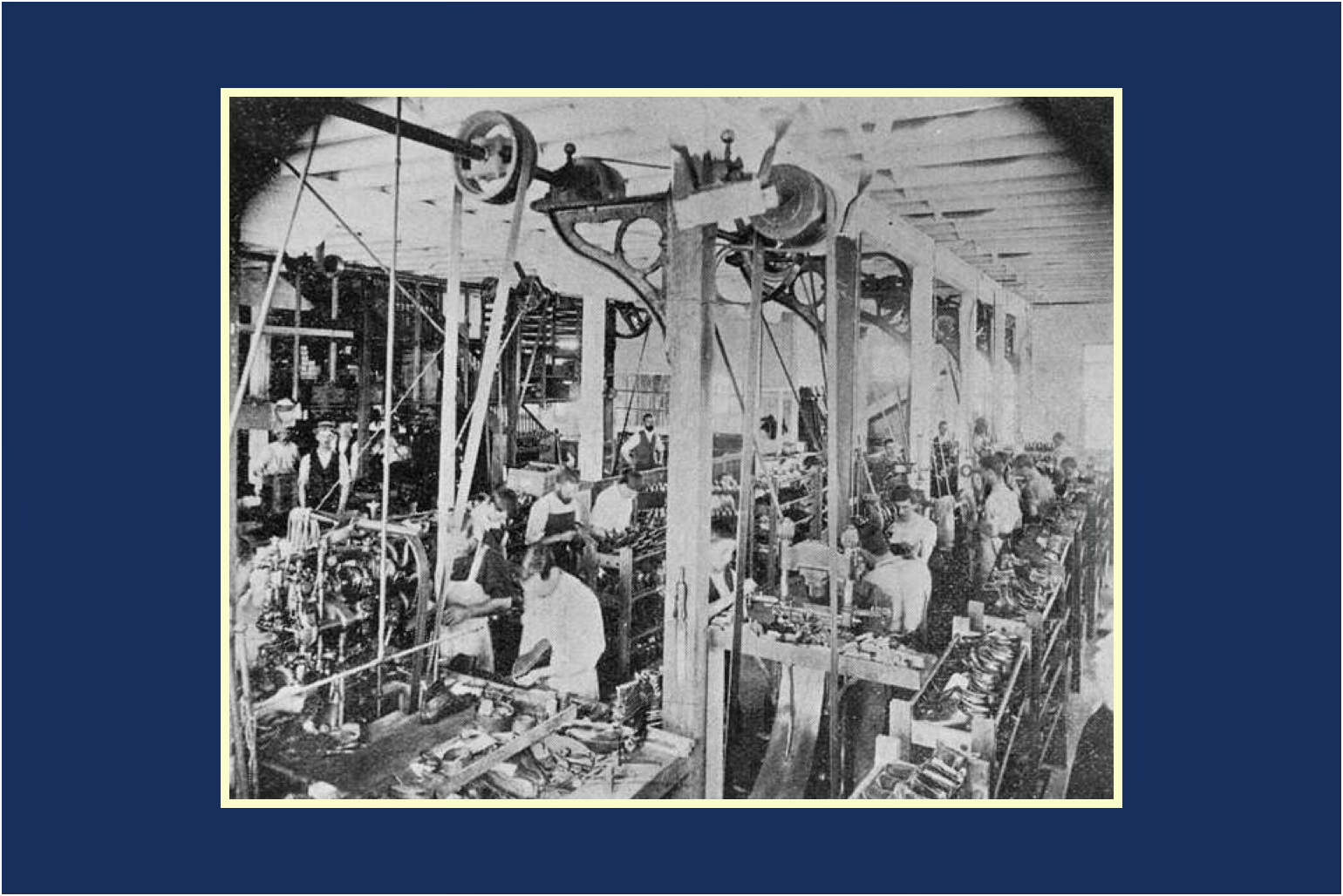
First Industrial Revolution: The Luddites smashed textile machinery, fearing job loss. But the economy didn’t collapse. Instead, new industries and urban jobs emerged, reshaping labor markets.
Second Industrial Revolution: The Captain Swing rioters and saboteurs resisted mechanised agriculture and factories, yet economies expanded as productivity soared and new roles absorbed displaced labour.
Post-WWII/Digital Revolution: Typographers’ unions and bank clerks protested early computers, but automation ultimately created more jobs in tech, services, and knowledge work, fueling decades of growth.
Personal Computer Era: The "Secretaries’ Revolt" and "Computerphobes" resisted word processors and spreadsheets, yet office automation led to booming white-collar sectors and the rise of IT professions.
Internet Age: Musicians (vs. Napster), booksellers (vs. Amazon), and taxi drivers (vs. Uber) fought disruption, but the digital economy generated trillions in new value, from e-commerce to app development.
Now, with Agentic AI: History suggests economies adapt, but the speed and scope of AI-driven displacement seems much larger.
The difference is not the disruption itself, but its speed, scale, and cognitive reach.
The challenge that led to a change in the relationships with our clients.
For a small software company like ours, it’s a chance to pioneer a model that balances automation with human collaboration, and transactional relationships with true partnerships.
We too are looking to automate all aspects, from bookkeeping to marketing and sales, but of course particularly our software development lifecycle.
But we’re also very aware that it’s ultimately the humans who are the binding factor, so we pay special attention to keeping them in the loop.
And we are in the process of rethinking our relationship with our clients, as much more of a partnership. From which is derived our system of flat rates for our clients projects, within which we do all but the largest new features
A Blueprint for Sustainable Automation
How do we make use of AI’s efficiency without eroding the human relationships that drive trust, creativity, and long-term value?
By treating clients as partners with flat-rate projects and a focus on iterative, AI-augmented development.
Clients don’t buy our code. They buy our expertise, judgment, and ability to translate their needs into solutions.
We focus on outcomes, not hours. We’re designing a system where technology amplifies human agency, for our team and our clients.
That’s how AI should work, as a tool for empowerment, not displacement.
The Luddites feared machines would make them obsolete. With the right framework, machines can make us more essential than ever.